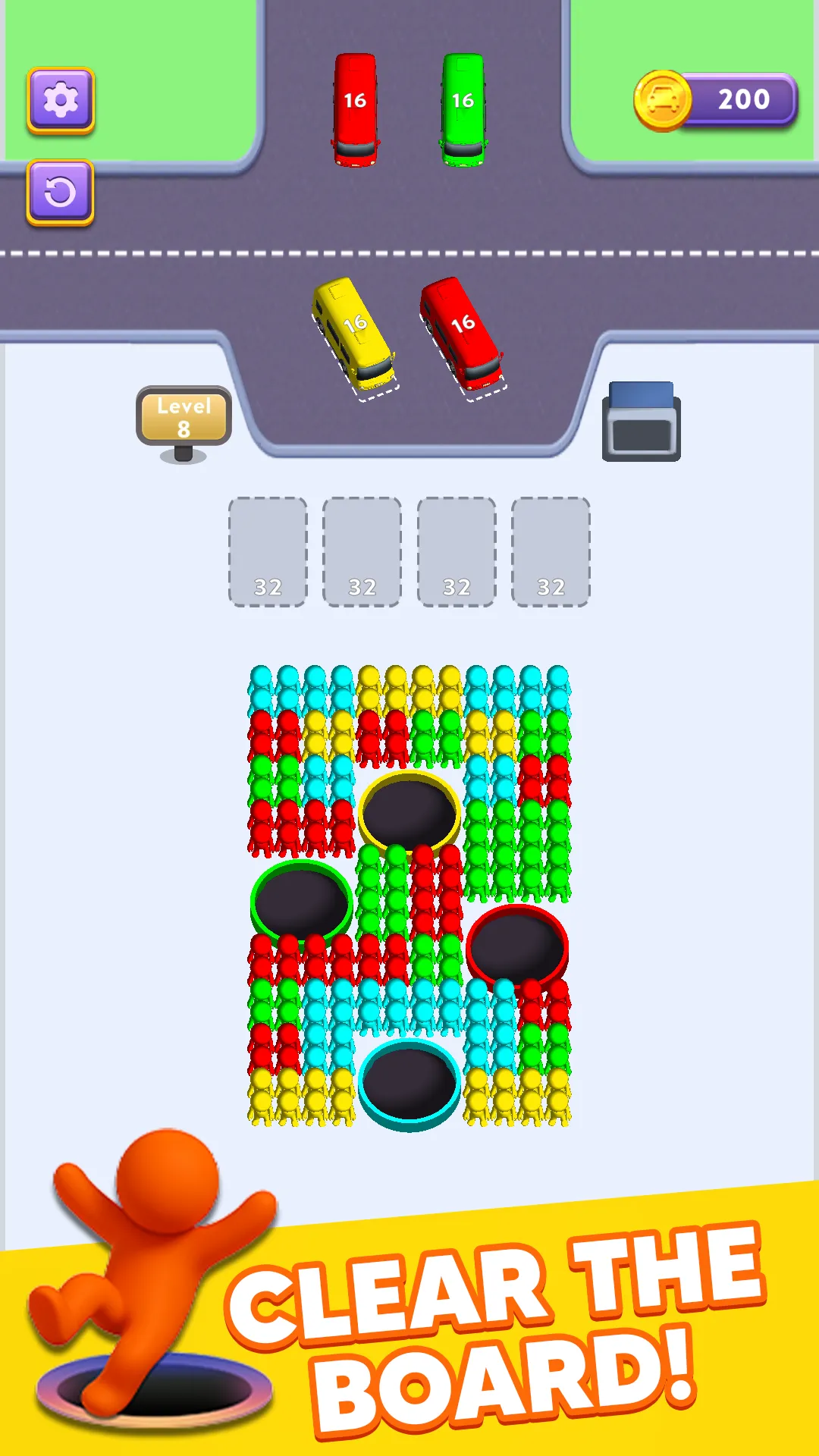
There is a version of mobile game development where the game is finished and then handed to a UA team who must "make creatives". It works for games that happen to be readable on camera. For the rest, CPI arrives high and nobody is sure whether the game or the creative is at fault.
We try to remove that ambiguity by treating the creative angle as part of the concept. This article covers how that shows up in our brief, our prototypes and our builds, and how we work with publishers' UA teams once tests start.
The three-second test
Every concept brief at the studio has a section called the creative angle, and it has to answer one question: what does a stranger understand in the first three seconds of a vertical video with the sound off?
For puzzle games the answers that work tend to be:
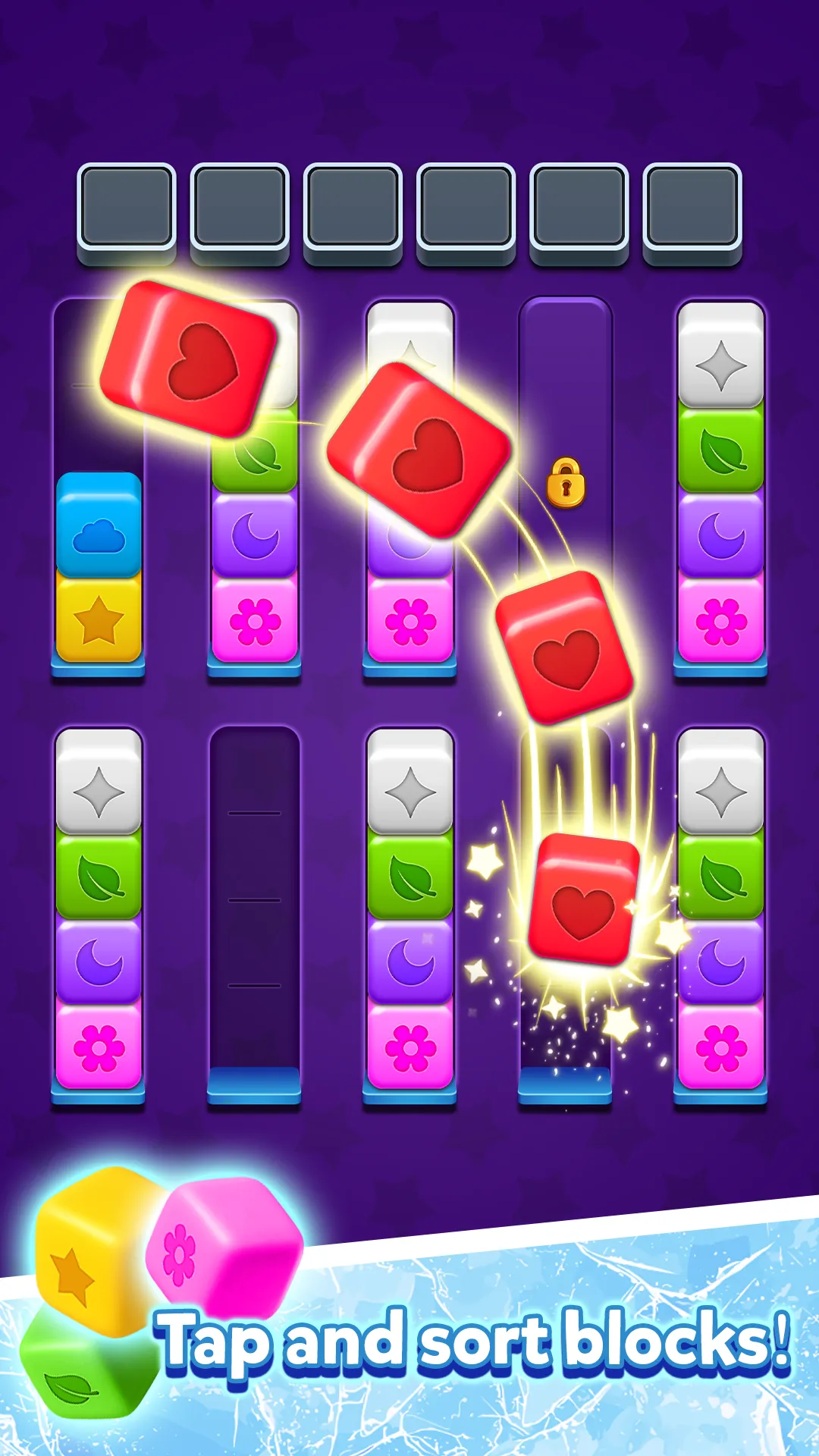
- A visible problem and an obvious action. A crowded tray, one cup that clearly needs to slide out. A tile that clearly matches two others.
- A satisfying transformation. A stack completing, a board clearing, a lane opening.
- A near-miss the viewer can solve. The viewer sees the move the on-screen player is about to miss. That itch is the click.
If the concept cannot produce one of these without narration, we either change the concept or accept that UA will be expensive and plan accordingly. Both are fine; being surprised later is not.
Designing hook moments into the game
Once the angle is chosen, we design specific moments to serve it:
- A "showcase level" early in the game that produces the ideal clip: clean layout, readable colors, a dramatic clear. It doubles as the first satisfying win for players.
- Fail states that look like a decision, not a mistake. Creatives built on "can you do better?" need a fail that the viewer believes they could avoid.
- Readable color and shape language — high-contrast objects, distinct silhouettes — which also helps accessibility and mid-range screens.
- Meta moments that render well: a city growing, a collection filling. These give the creative team a second family of videos when the mechanic clips saturate.
None of this compromises the game. Readable, satisfying, decision-rich play is also what retains.
Capture-ready builds
The single most useful thing a studio can hand a creative team is a capture build: the game with a debug panel that lets them:
- Jump to any level and reset it instantly.
- Toggle UI layers (hide HUD, hide currency) for clean footage.
- Slow down or speed up time for emphasis.
- Force specific board states or near-misses.
- Switch themes or skins if the game has them.
We produce a capture build from week two of a prototype (see our prototype pipeline) so creative tests can start before the game is polished. Early CPI data from rough footage is more valuable than a beautiful trailer six weeks later.
Playables
Playable ads are a small, focused version of the core interaction. Because our mechanics are isolated behind a narrow contract in the framework, a playable can reuse the mechanic's logic with a tiny presentation layer and no meta, monetization or tracking dependencies. That keeps the playable light and faithful to the real game — which matters, because a playable that plays differently from the app produces installs that do not retain.
The design rule for playables is the same as for videos: one problem, one action, one satisfying result, then the store button.
The testing cadence
When a prototype enters testing with a publisher, we agree a creative cadence with their UA team:
- Batch one — 6–10 concepts across the mechanic clip, the near-miss and the meta moment. Measure CTR, CPI and — as soon as possible — D1 of the installs each creative produced.
- Cut and iterate — keep the top angles, produce variations (first three seconds, colors, pacing, text overlays).
- Feed back into the game — if the winning creative shows a moment the game does not deliver early, we move that moment earlier. Creative and game converge.
The metric that keeps everyone honest is retention by creative, not CPI alone. A cheap install that leaves on day one is a cost, not a win.
Working with the publisher's team
Publishers usually have creative teams far larger than ours, and that is the right division of labor. Our job is to make their job easy: readable mechanics, capture builds early, fast turnaround on requests like a new showcase level, and honest data on which installs retained. The best collaborations we have had were the ones where the creative lead was in the prototype brief meeting, not just the launch meeting.
Summary
A game that can be marketed is a game that explains itself. Decide the creative angle at concept, design hook moments on purpose, ship capture builds early, build playables on the real mechanic and measure retention by creative. UA stops being a mystery box and becomes a design input.
Creative support is part of every prototype and production we run with partners. See how we work with publishers.